Jesuit Well
|
Current Sign Text |
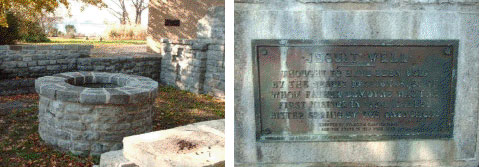
JESUIT WELL |
|
Problematic issues |
The capitalization of the phrase "First Visitor" is similar to the use of the phrase "First Settler. It suggests that the French Jesuit was the first visitor of any consequence to this area. In actuality, as the center of the Haudenosaunee Alliance, the entire area around Onondaga Lake has been an important center of governance and commerce for centuries. Long before the Europeans arrived, people from many indigenous nations would have come here to trade and to negotiate diplomatic relationships. |
|
Location |
On Old Liverpool Road, behind LeMoyne Manor, Liverpool, NY |
|
Significance |
This replica of a well is reputed to be the place of the spring where Father Le
Moyne in 1654 drew water and identified the bitter taste as salt. |
|
Indigenous Place Names for Site |
The Onondaga word for this place was translated as "bitter spring". |
|
Circumstances of Marker Placement |
The site of the well was uncovered during a WPA project in the 1930s which included the construction of a "French fort" marking the site of the 17th century Jesuit mission. As part of that project, the well was rebuilt. Both sites were dedicated in August16, 1933 with a large parade and pageant. The dedication of the well commemorated the role of the Jesuits in recognizing the potential commercial value of the salt to European colonists, which ultimately became a contributing factor in the development of the city of Syracuse. |
|
Additional Information |
Also see the marker text for Onondaga Salt Spring. |
|
Sources |
1. Bell, "The Onondaga New York Salt Works (1654 - 1926)", Science Tribune, October
1998, http://www.tribunes.com/tribune/sel/bell.htm. Accessed March 26, 2012. |
|
Review Details |
Gail Bundy, March 2012 |